My goal with this design was to create an elevated basic, and this combination of texture, lace, and gorgeous color resulted in exactly what I was going for. Heering is bold and luxurious and easy to wear - a simple pullover, with some extra style!
The deeply patterned, head-turning motif I used is absolute magic. From some angles, the lace is the focus, and from others, it's the texture that takes the stage. I love the diagonal lines and bold elements of the fabric, and will have fun layering with this.
Plus, I promise the 7-stitch, 12-row repeat is much easier than it looks. The straight lines of the lace and the textured knots have a rhythm that's easy to find, and the elements line up visibly as you work, so finding your place in pattern is simple, and you immediately can see if you get mixed up!
Beyond the fabric itself, the details on Heering are designed to stand out. Bold collar, hem, and cuff ribbings provide simple contrast from the motif and add to the dense, cozy vibe.
The texture and lace pattern is worked in panels on the front and back, so the undulating edge of the pattern shows up along the sides of the body between hem to shoulder.
A split hem transitions into ribs outside the patterned panel, emphasizing that lace edge, while also providing a place to modify fit if needed. The sleeves also incorporate lace panels mixed with ribbing at center underarm for the same purpose.
As always, notes on where and how you can alter the pattern for a more personal fit are included. Instructions for the lace and texture pattern are both charted and written.
Heering is worked from the bottom up. Hems are knit flat in two pieces and then joined so the body can be worked in the round to armholes. At armholes, Heering is split into a front and back, which are continued flat to shoulders and seamed. Once shoulders are seamed, collar stitches are picked up around neckline and worked in the round. Lastly, sleeve stitches are picked up around armholes and worked in the round to cuff.
Yarn: Knitting For Olive Heavy Merino (100% Merino wool), 136yds/125m per 1.76oz/50g skein. This is a soft, round worsted weight wool. Sample is knit in the Bordeaux colorway.
If substituting yarn, I suggest a round worsted-weight fiber without too much weight or drape, as the combination of knots and lace will hold its shape best over time in a lightweight fiber.
Gauge: 18 sts and 24 rounds/rows in lace. 20 sts and 28 rounds in rib at sides on larger needle, and in cuff and collar rib on smaller needle. Gauge is calculated per 4”/10cm, worked both flat and in the round, and is based on final fabric.
Needles: US#7/4.5mm for hem, body and sleeves. US#6/4mm for collar and cuffs.
I suggest a long circular for body and hems and preferred method for small circumferences on sleeves and collar. Adjust needle size to achieve gauge if needed. Optional: An additional long US#7/4.5mm needle for hem setup.
Sizes:
38.5(41.75,44.75,48,51,54.25) (57.25,60.5,63.5,66.5)"
97.75(106,113.75,122,129.5,137.75) (145.5,153.75,161.25,169) cm.
Sizes above are based on bust measurement of sweater in final, blocked fabric. Choose the size that allows for the amount of ease you prefer. Sample is shown worn with approx 4"/10cm of positive ease.
Yardage:
1100(1200,1300,1400,1500,1600)(1750,1850,1900) yds
1005(1100,1190,1280,1375,1465)(1600,1690,1737) m
Yardage includes a 10-15% buffer.
My goal with this design was to create an elevated basic, and this combination of texture, lace, and gorgeous color resulted in exactly what I was going for. Heering is bold and luxurious and easy to wear - a simple pullover, with some extra style!
The deeply patterned, head-turning motif I used is absolute magic. From some angles, the lace is the focus, and from others, it's the texture that takes the stage. I love the diagonal lines and bold elements of the fabric, and will have fun layering with this.
Plus, I promise the 7-stitch, 12-row repeat is much easier than it looks. The straight lines of the lace and the textured knots have a rhythm that's easy to find, and the elements line up visibly as you work, so finding your place in pattern is simple, and you immediately can see if you get mixed up!
Beyond the fabric itself, the details on Heering are designed to stand out. Bold collar, hem, and cuff ribbings provide simple contrast from the motif and add to the dense, cozy vibe.
The texture and lace pattern is worked in panels on the front and back, so the undulating edge of the pattern shows up along the sides of the body between hem to shoulder.
A split hem transitions into ribs outside the patterned panel, emphasizing that lace edge, while also providing a place to modify fit if needed. The sleeves also incorporate lace panels mixed with ribbing at center underarm for the same purpose.
As always, notes on where and how you can alter the pattern for a more personal fit are included. Instructions for the lace and texture pattern are both charted and written.
Heering is worked from the bottom up. Hems are knit flat in two pieces and then joined so the body can be worked in the round to armholes. At armholes, Heering is split into a front and back, which are continued flat to shoulders and seamed. Once shoulders are seamed, collar stitches are picked up around neckline and worked in the round. Lastly, sleeve stitches are picked up around armholes and worked in the round to cuff.
Yarn: Knitting For Olive Heavy Merino (100% Merino wool), 136yds/125m per 1.76oz/50g skein. This is a soft, round worsted weight wool. Sample is knit in the Bordeaux colorway.
If substituting yarn, I suggest a round worsted-weight fiber without too much weight or drape, as the combination of knots and lace will hold its shape best over time in a lightweight fiber.
Gauge: 18 sts and 24 rounds/rows in lace. 20 sts and 28 rounds in rib at sides on larger needle, and in cuff and collar rib on smaller needle. Gauge is calculated per 4”/10cm, worked both flat and in the round, and is based on final fabric.
Needles: US#7/4.5mm for hem, body and sleeves. US#6/4mm for collar and cuffs.
I suggest a long circular for body and hems and preferred method for small circumferences on sleeves and collar. Adjust needle size to achieve gauge if needed. Optional: An additional long US#7/4.5mm needle for hem setup.
Sizes:
38.5(41.75,44.75,48,51,54.25) (57.25,60.5,63.5,66.5)"
97.75(106,113.75,122,129.5,137.75) (145.5,153.75,161.25,169) cm.
Sizes above are based on bust measurement of sweater in final, blocked fabric. Choose the size that allows for the amount of ease you prefer. Sample is shown worn with approx 4"/10cm of positive ease.
Yardage:
1100(1200,1300,1400,1500,1600)(1750,1850,1900) yds
1005(1100,1190,1280,1375,1465)(1600,1690,1737) m
Yardage includes a 10-15% buffer.
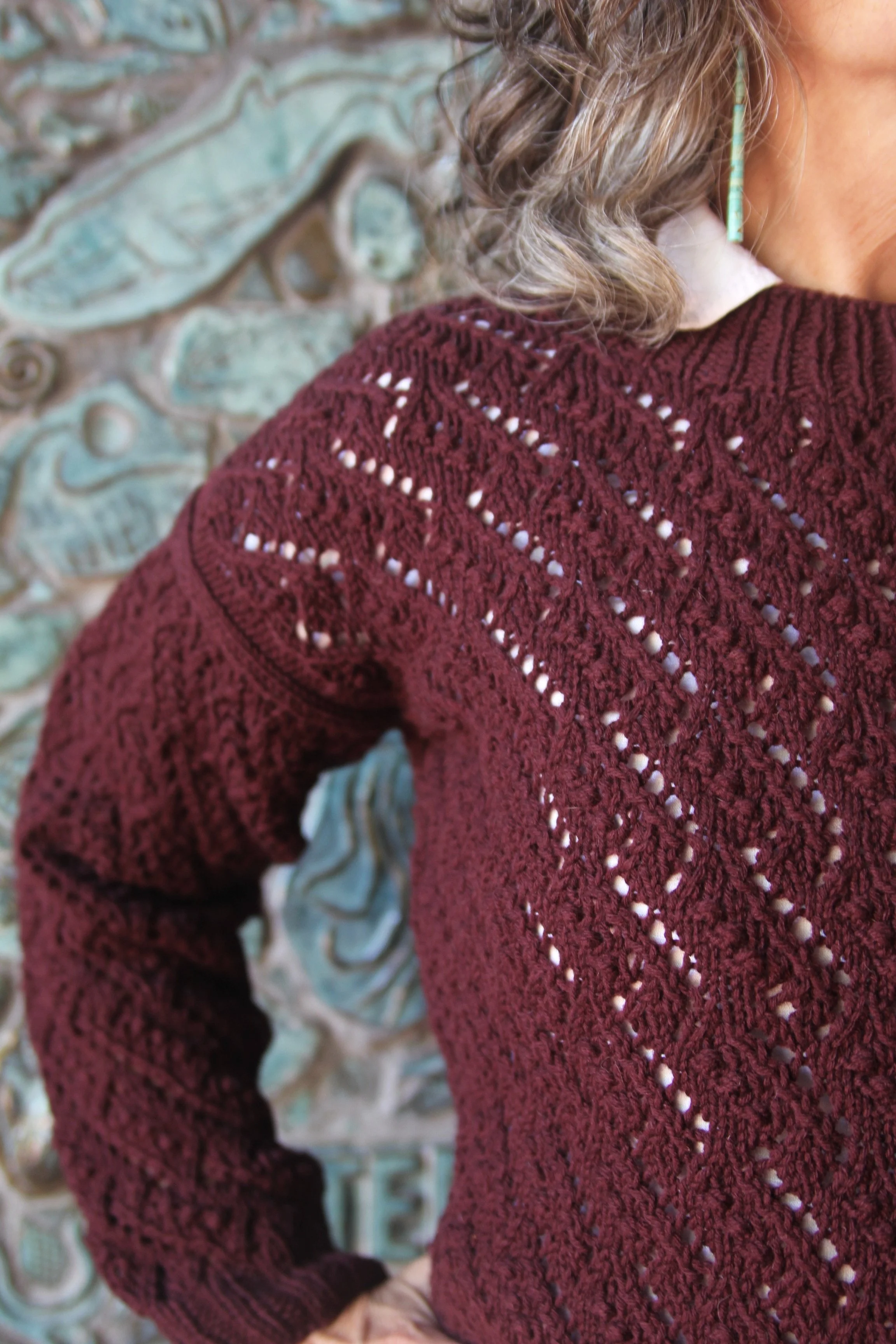 Image 1 of 7
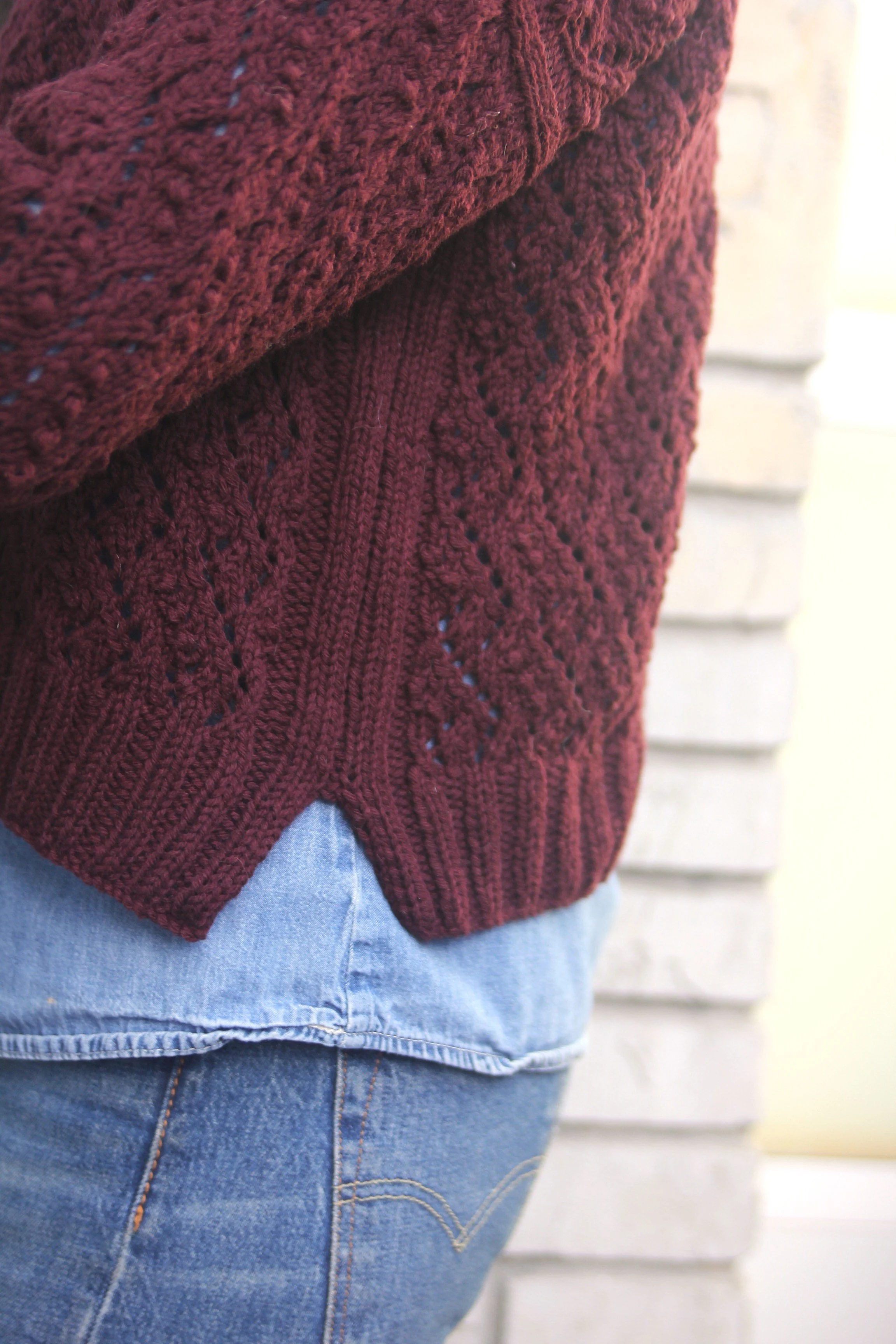 Image 2 of 7
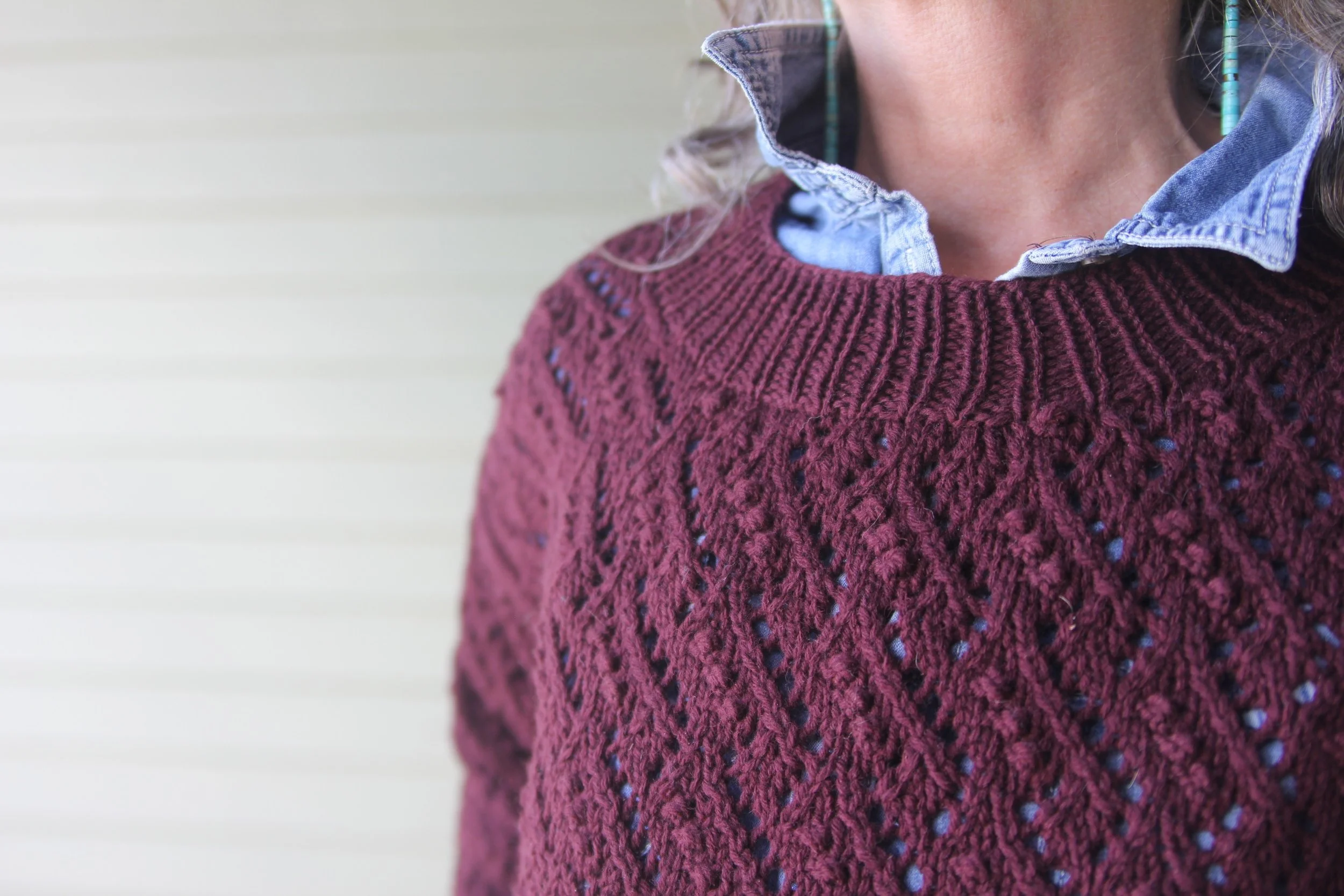 Image 3 of 7
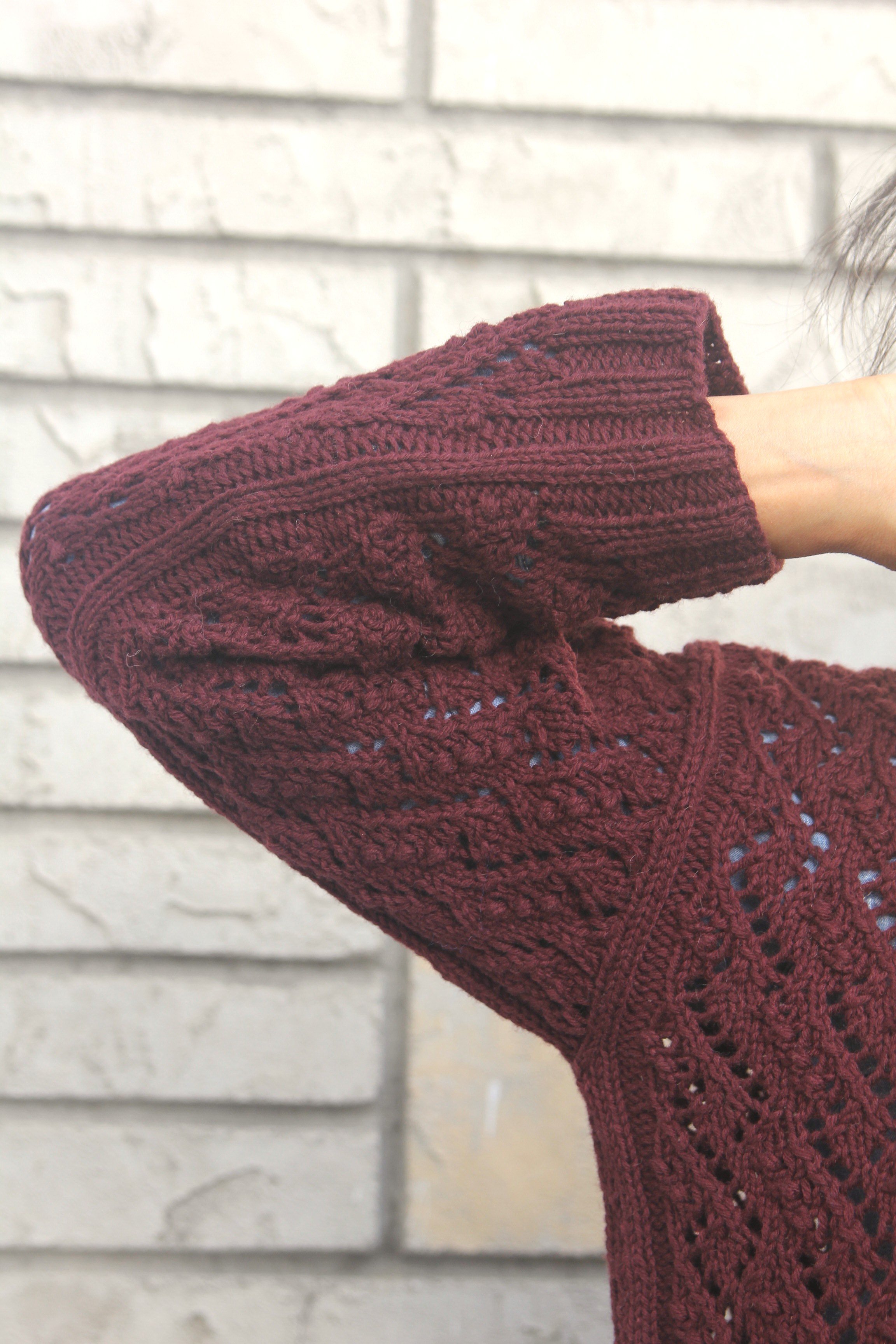 Image 4 of 7
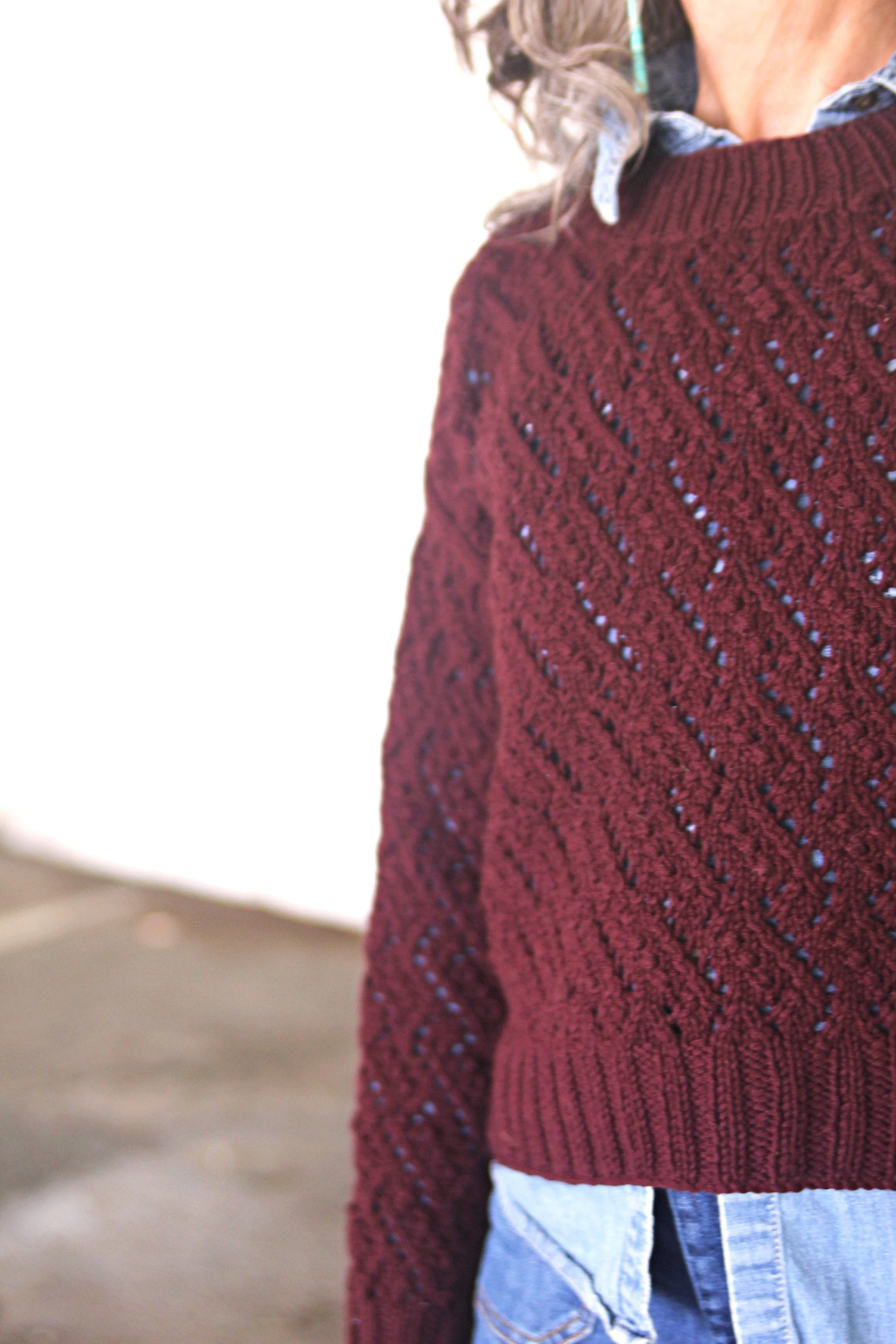 Image 5 of 7
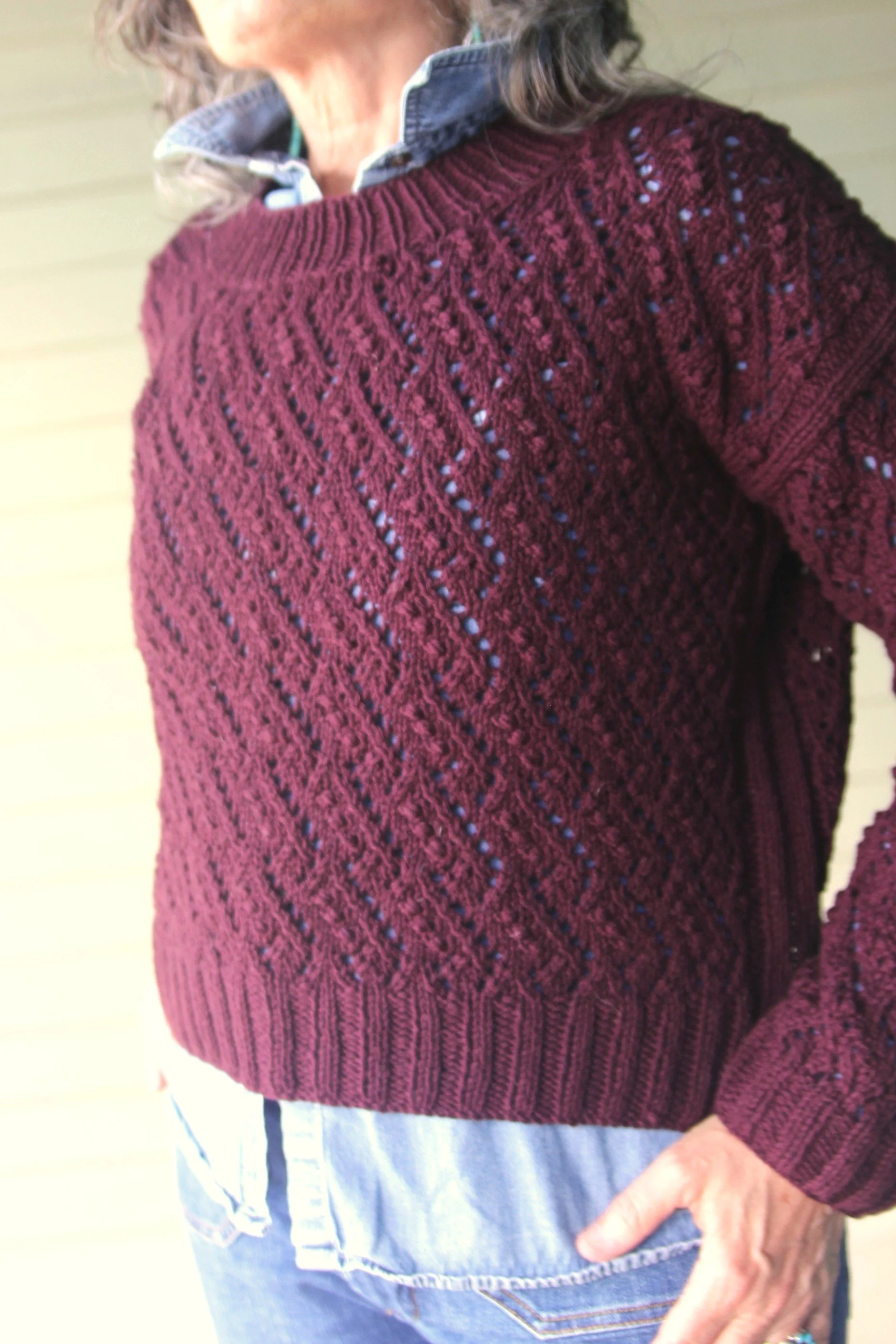 Image 6 of 7
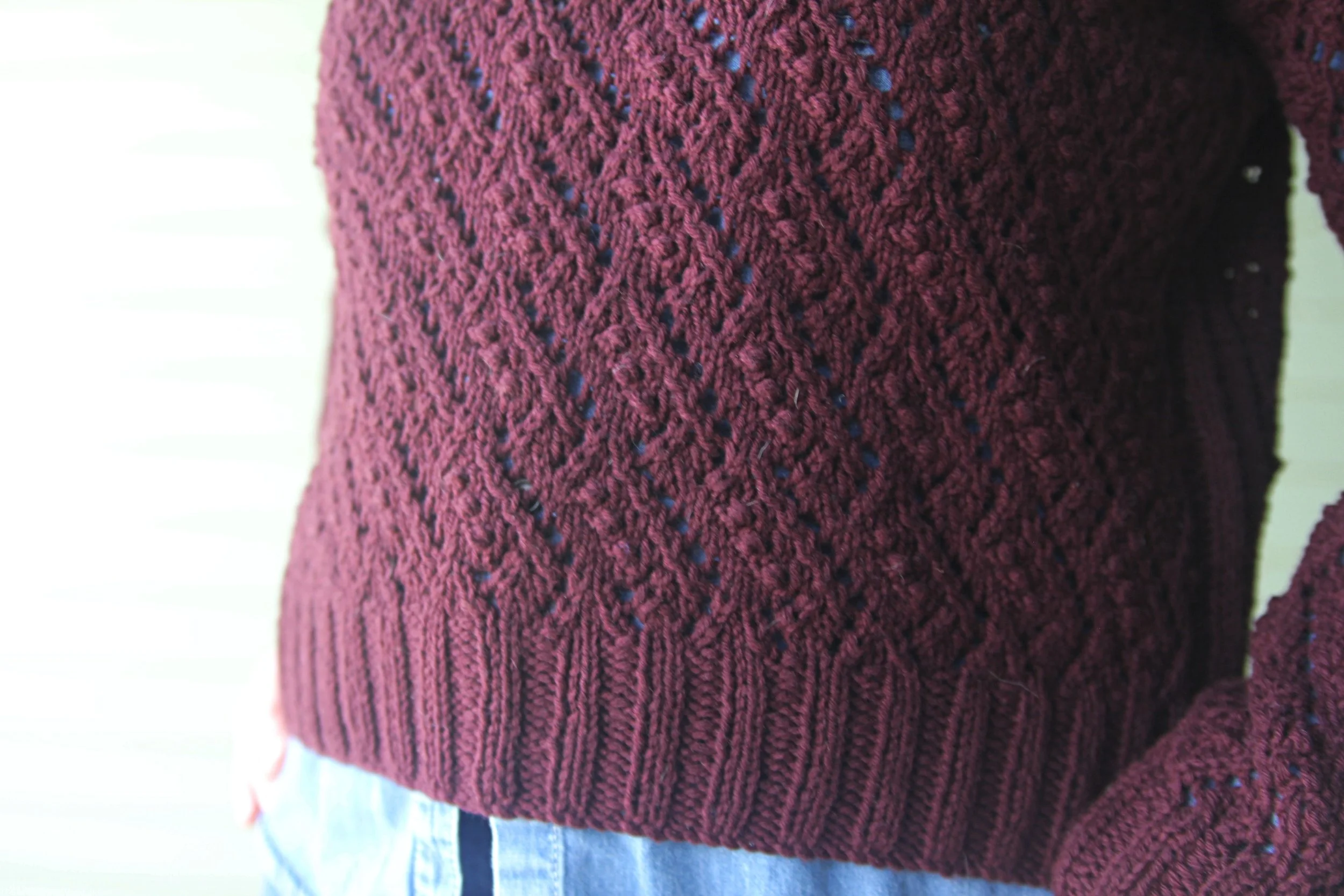 Image 7 of 7